From BBC:
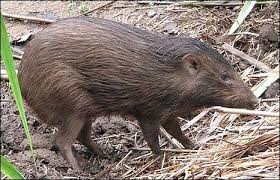
Pygmy Hog
The pygmy hog (Porcula salvania) stands barely 25-30 cm (10-12 inches) high and weighs up to 9kg (20lb).If you are in Guwahati visit the breeding center and talk to Dr. Narayan.
Just a few hundred at most are thought to remain, all of them in India’s north-eastern state of Assam.
Over the past decade the pigs have been bred in captivity and the process of releasing them into the wild has begun.
After 12 years of patient conservation effort, which began with six wild pygmy hogs, Assam Forest officials and experts from the Pygmy Hog Conservation Programme (PHCP) have now released 16 hogs into the Sonai Rupai wildlife sanctuary, about 175km (110 miles) north of the state capital, Guwahati.
Dr Goutam Narayan of Durrell Wildlife and EcoSystems-India is the man credited with the success of the programme.
“The hogs are going through a soft release process. We have kept them in an enclosure in the Sonai Rupai grasslands,” he told the BBC.
“After a while, we will open the gates of the enclosures and let them out in the wilds, but will closely monitor them.”
Dr Narayan and his team of wildlife experts have achieved their success with support from the Durrell Wildlife Conservation Trust (DWCT), a Jersey-based conservation organisation started by naturalist Gerald Durrell.
“By 1964, the pygmy hog was thought to be extinct with no sightings reported for several years. Then in 1971, four pygmy hogs were recovered from a market in Paneri in north Assam and that gave everyone cause for hope,” Dr Narayan said.
He said there could be fewer than 400 pygmy hogs in the world and all of them are in Assam’s Manas national park in the foothills of Bhutan.